Looks like there are cases where high taxes actually spur innovation and investment. (Reuters)
Why is there room for arbitrage on used books? Many professors get desk copies of textbooks, and many professors sell these copies to book buyers. Usually the arbitrageur offers about 20-30 bucks for a book they can turn over for 90-100. It makes some sense that there will be enough individual small fish for whom the spread is not big enough to justify the costs of finding the market price and finding a buyer (which, is in fact not too hard with an Amazon Marketplace seller's account). But it amazes me that a used book store isn't researching it's market better. It seems like the bookstore's proprieter would be interested in picking up those extra bills off the sidewalk. (Marginal Revolution)
Finally, an interesting nerdy statistical criticism of seemingly contrarian findings about political momentum. (Freakonomics)

Sunday, October 24, 2010

Several Links
This one is oldish but I think an interesting read on the composition of US health care costs (the Incidental Economist).
China's new five-year plan (the Economist).
Underwater (The Economist).
Trade Costs (Free Exchange).
The microeffects of the Arizona immigration law (Washington Post).
Meanwhile we send mixed signals (People Move).
Where the money is in the music industry (Economist).
Oil prices (Economist).
China's new five-year plan (the Economist).
Underwater (The Economist).
Trade Costs (Free Exchange).
The microeffects of the Arizona immigration law (Washington Post).
Meanwhile we send mixed signals (People Move).
Where the money is in the music industry (Economist).
Oil prices (Economist).
Tuesday, October 19, 2010
Rare Earth, Export Restrictions, and the Terms of Trade
China has been imposing export restrictions on rare earth metals (used in many high-tech and "green economy" industries, I'm told). By restricting supply, prices rise; rents accrue to the supplier(s) at the expense of foreign buyers. This is no different from what OPEC does to manipulate the quantity supplied in order to influence the market price of oil.
How is this different from the "optimal" tariff discussed in any undergraduate textbook? The optimal tariff is couched in the context of a tariff on imports. By restricting demand, prices (of imports) fall; rents accrue to the buyer(s) and/or the treasury in the tariff-imposing country at the expense of foreign sellers. One problem with this policy is that it can and often does lead to retaliatory tariffs by the country that sells those goods being targeted by the country that initially imposed its "optimal" tariff. The first country re-retaliates, and so on resulting in a trade war. Everyone loses; think Hoover, Smoot-Hawley, and competitive devaluations and tariffs that sank the world economy deeper and deeper into the Great Depression.
Popular opinion seems adamant that we "do something". Voters, politicians, and even some very bright economists are advocating some form of punishment against China. What most popular opinion neglects (and that very smart economists should be well aware of) is that restricting exports in the way China (and OPEC) has has a very similar effect as restricting imports. In fact, in relative terms, it has the exact same impact on prices, a concept known as Lerner Symmetry.
So what does one do about it? Well, we can do nothing and minimize our losses, or we can retaliate and instigate a potential trade war.
How is this different from the "optimal" tariff discussed in any undergraduate textbook? The optimal tariff is couched in the context of a tariff on imports. By restricting demand, prices (of imports) fall; rents accrue to the buyer(s) and/or the treasury in the tariff-imposing country at the expense of foreign sellers. One problem with this policy is that it can and often does lead to retaliatory tariffs by the country that sells those goods being targeted by the country that initially imposed its "optimal" tariff. The first country re-retaliates, and so on resulting in a trade war. Everyone loses; think Hoover, Smoot-Hawley, and competitive devaluations and tariffs that sank the world economy deeper and deeper into the Great Depression.
Popular opinion seems adamant that we "do something". Voters, politicians, and even some very bright economists are advocating some form of punishment against China. What most popular opinion neglects (and that very smart economists should be well aware of) is that restricting exports in the way China (and OPEC) has has a very similar effect as restricting imports. In fact, in relative terms, it has the exact same impact on prices, a concept known as Lerner Symmetry.
So what does one do about it? Well, we can do nothing and minimize our losses, or we can retaliate and instigate a potential trade war.
Monday, October 18, 2010
10 Questions for N. Gregory Mankiw
This is great (Barry Ritzholz).
I don't doubt that taxes affect incentives to be productive, but N. Gregory Mankiw seems to be exaggerating them in last week's op-ed.
Read them all. They're a hoot. Here's one of my favorites.
5. You teach at Harvard and live in “Taxachusetts.” If state taxes are so important, have you considered teaching at Yale, and living in much lower state tax land of Connecticut?
I don't doubt that taxes affect incentives to be productive, but N. Gregory Mankiw seems to be exaggerating them in last week's op-ed.
Read them all. They're a hoot. Here's one of my favorites.
5. You teach at Harvard and live in “Taxachusetts.” If state taxes are so important, have you considered teaching at Yale, and living in much lower state tax land of Connecticut?
Saturday, October 16, 2010
Prisonomics
How the Financial Crisis has affected inmates (here, via AT at MR):
There was an actual economic reason about this. I went away in Michigan, where a lot of people lost their houses, mostly poor people already. When they had to move away from the prison, it meant they couldn't bring their loved ones as much contraband group, which meant the price of what there was sky rocketed....Bet you didn't read about that one in the Wall Street Journal.
Sunday, October 10, 2010
"Recovery" vs. "Recovered"
Economists take a lot of flak, some of it from really smart and savvy guys like Warren Buffet, for saying the recession is "officially" over and the recovery has "officially" begun. According to Buffet,
But it's not semantic, it's common sense. Think of a patient in a hospital. Don't we say a patient is "recovering" once the problem is identified, treated and beginning to improve? Sure, during your recovery you may still not be working or doing certain things the same as you did prior to your illness or injury, but things are moving in that direction. You're no longer getting sicker, you're getting well. In this context, the economic definition makes perfect (common) sense.
I think we're in a recession until real per capita GDP gets back up to where it was before. That is not the way the National Bureau of Economic Research measures it. But I will tell you that to any-- on any common-sense definition, the average American is below where he was before, or his family, in terms of real income, GDP.James Hamilton defends the profession, conceding that it's a matter of semantics.
Economists have used the term "recession" to have this particular meaning-- the episode between a peak and trough-- for 150 years or so of data.
But it's not semantic, it's common sense. Think of a patient in a hospital. Don't we say a patient is "recovering" once the problem is identified, treated and beginning to improve? Sure, during your recovery you may still not be working or doing certain things the same as you did prior to your illness or injury, but things are moving in that direction. You're no longer getting sicker, you're getting well. In this context, the economic definition makes perfect (common) sense.
Thursday, October 7, 2010
Incentives or Endogeneity?
Via MR and Barry Ritholtz:
Why? I saw several explanations, but this seems the most plausible (from the MR comments):
Seems like Tyler's assignment of the phenomenon was a jump to conclusions by an economist looking under the light instead of looking where the keys were.

It turns out that major league hitters on the verge of a 3 handle batting average — .300 — hit an astounding .463 on their last at bat of the season.
Why? I saw several explanations, but this seems the most plausible (from the MR comments):
If a .299 hitter gets a hit in his first AB of the last game of the season, his manager takes him out. If he makes an out, he stays in the game. If he goes 0-4, he finishes at .295 or so but doesn't count in the sample of how .299 batters do in their last AB.
Seems like Tyler's assignment of the phenomenon was a jump to conclusions by an economist looking under the light instead of looking where the keys were.
Monday, October 4, 2010

Wednesday, September 29, 2010
More on small-farm organic locavorism (from Freakonomics). Just because there are fewer cases of salmonella reported on from free-range chickens doesn't mean that the risks are lower - free range farms just don't produce enough eggs for their salmonella to get noticed.

Tuesday, September 28, 2010

Creative Destruction
Apparently, the athletic department at VMI is switching over to digital video, judging from this email I got:

Sent with permission of the Director of Intercollegiate Athletics
The football office has approximately 250 new video tapes that we no longer need. If you can use these please contact me. Thanks!
Monday, September 27, 2010
Deception at Farmers' Markets
Via Tim Diette at WLU:
I'm not a expert in the economics of regulation, but I do a bit of political economy in my research, and I did OK in the game theory portion of my micro sequence in grad school, so here's how I'd see this one playing out. Regulation will ultimately be lobbied for most by big players in the organic/local market (think whole foods, etc.). My thinking here is that the big producers actually have less incentive to "cheat" by outsourcing produce advertised as local and/or using pesticide-enhanced produce, because everyone will remember it if Whole Foods gets busted; no one will remember if Johnny Farmer does. Consumer groups will support it, but the final product will mainly serve to: (1) bar entry for small sellers; and (2) help the same big players signal their reputation cheaply. It will go over great for a while, but eventually, enough of the relatively honest small producers will collectively complain about the onerous opportunity-killing regulations. If they succeed, we'll be right back at square one.
Stories from NY Times (here) and Roanoke Times (here).A nice example of the potential value of regulation so that consumers have information on what they are buying.
I'm not a expert in the economics of regulation, but I do a bit of political economy in my research, and I did OK in the game theory portion of my micro sequence in grad school, so here's how I'd see this one playing out. Regulation will ultimately be lobbied for most by big players in the organic/local market (think whole foods, etc.). My thinking here is that the big producers actually have less incentive to "cheat" by outsourcing produce advertised as local and/or using pesticide-enhanced produce, because everyone will remember it if Whole Foods gets busted; no one will remember if Johnny Farmer does. Consumer groups will support it, but the final product will mainly serve to: (1) bar entry for small sellers; and (2) help the same big players signal their reputation cheaply. It will go over great for a while, but eventually, enough of the relatively honest small producers will collectively complain about the onerous opportunity-killing regulations. If they succeed, we'll be right back at square one.
Shortcut to Serfdom
This piece does a good job of the real and tangible threats to liberty that are out there right now. Many started under "W" but have been continued and in some cases escalated under Obama. Mr. Friedersdorf points out:
There are real threats to liberty, but they have less to do with Obamacare, bailouts, or taxes. Which does the conservative Friedersdorf prefer?
I recommend the whole piece, but I do disagree with the statement, "The last two presidents have asserted authority unprecedented in American history." Sadly, the current circumstances are not particularly unprecedented or even extraordinary. We had the internment camps during World War II, McCarthyism, J. Edgar Hoover's domestic spying, Watergate, Iran Contra... There is a seemingly endless list of landmark historical instances where our government acted in contradiction to the liberties proscribed in the constitution. On the broader issue, however (that we need to guard our civil liberties much more than we need to worry about some perceived injustice stemming from our personal disagreements with a particular economic policy, the author hits it right on the head.

Seven decades have passed since The Road to Serfdom was published. Social democracy hasn’t yet led Europe or any of its diverse countries into serfdom. On the contrary, they’re are among the most free and prosperous countries in the history of human civilization. I prefer the American system. It’s better, all things considered. In order to make the case for it, we need not pretend that the people of Europe are in chains.
There are real threats to liberty, but they have less to do with Obamacare, bailouts, or taxes. Which does the conservative Friedersdorf prefer?
Forced to choose, I’d rather live in the ACLU’s idea of the perfect America than a country where we repeal Obamacare, eliminate earmarks, and persist in chipping away at civil liberties to fight drugs and terrorists. The former may be a “road to serfdom.” The latter is a shortcut to the same place.
I recommend the whole piece, but I do disagree with the statement, "The last two presidents have asserted authority unprecedented in American history." Sadly, the current circumstances are not particularly unprecedented or even extraordinary. We had the internment camps during World War II, McCarthyism, J. Edgar Hoover's domestic spying, Watergate, Iran Contra... There is a seemingly endless list of landmark historical instances where our government acted in contradiction to the liberties proscribed in the constitution. On the broader issue, however (that we need to guard our civil liberties much more than we need to worry about some perceived injustice stemming from our personal disagreements with a particular economic policy, the author hits it right on the head.
Thursday, September 23, 2010
Some links: Who's lobbying against pot; how cops are catching those who are for it
Turns out, beermakers and police (two people who benefit most economically from prohibition) lobby most (Huffington Post).
Do I see an unholy freedom alliance between Teapartiers and NORML in America's future (420 Tribune)?
Is more vote-buying a good thing or a bad thing (Marginal Revolution)?
If you pay someone to help you cheat, do you deserve a refund when you discover that they cheated (Dan Ariely)?
How to eat a muffin (Incidental Economist). The second I read this, I realized that I already eat muffins this way, even when I'm not walking.
Imperialistic (or, mercantilistic?) Economists (Justin Wolfers).
Do I see an unholy freedom alliance between Teapartiers and NORML in America's future (420 Tribune)?
Is more vote-buying a good thing or a bad thing (Marginal Revolution)?
If you pay someone to help you cheat, do you deserve a refund when you discover that they cheated (Dan Ariely)?
How to eat a muffin (Incidental Economist). The second I read this, I realized that I already eat muffins this way, even when I'm not walking.
Imperialistic (or, mercantilistic?) Economists (Justin Wolfers).
One good sentence on subsidies
From Free Exchange:
The upside to cash-benefits is that it forces policymakers to confront the trade-offs involved in delivering a certain subsidy and evaluate whether it makes sense.
Tuesday, September 21, 2010
Three good sentences
Liberal arts education has taken a beating lately from a wide range of critics (for examples on the economics department side of things see hereor here, and for a general critique see here or here). Tyler Cowen makes a good (and concise!) defense here. Here's the good stuff:
I wonder how Tyler (a libertarian, Austrian-leaning economist) feels about the fact that a significant portion of that liberal arts education is heavily subsidized?

A liberal arts education helps us think with greater subtlety, even if it does not improve our performance on subsequent standardized tests. I see an impact here even on the lesser students in state universities. It also helps explain how the U.S. so suddenly leaps from having so-so high schools to outstanding graduate schools; how many other countries emphasize liberal arts education in between?
I wonder how Tyler (a libertarian, Austrian-leaning economist) feels about the fact that a significant portion of that liberal arts education is heavily subsidized?
Thursday, September 9, 2010


A little economic knowledge can do quite a bit of harm
From Free Exchange:
I know some Ph.D. trained economist robots, who also can't talk beyond the "markets are always right" mantra. Some economic problems, as it turns out, are more complex than the "X marks the spot" pirate logic (AAARRGH!) of simple supply and demand.
I've certainly met my share of Econ 101 robots, who can't talk beyond the "markets are always right" models one gets in early economics classes.
I know some Ph.D. trained economist robots, who also can't talk beyond the "markets are always right" mantra. Some economic problems, as it turns out, are more complex than the "X marks the spot" pirate logic (AAARRGH!) of simple supply and demand.
Big, bad government
If the government's intrusiveness in the real economy can be at all proxied by public sector employment, then the Tea Party should take note of what's happened in the last two years.


Wednesday, September 8, 2010

Tuesday, September 7, 2010
Trivia vs. Statistics
From Advanced NFL Stats:
Yup.
Who has the longest interception return ever? Which running back ran for
the most yards in a single game? What team scored the most fourth
quarter touchdowns in a season?
Answer: I don't care.
That's trivia, not statistics. What I'm interested in is analysis. What
makes a winning team? Is it better to go for it or punt on 4th and short
at the 50 yard line? Which teams are most likely to make the playoffs?
How much does luck play a part in any game?
Yup.
Wednesday, September 1, 2010
Crap!
The sting in the tail is that by paying less attention, we are less able to counter-argue what the ad is communicating. In effect we let our guard down and leave ourselves more open to the advertiser's message.
Interesting.

One Awesome Sentence
From Reuters:

Older people like reading negative news stories about their younger counterparts because it boosts their own self-esteem, according to a new study.
Friday, August 27, 2010
Two good sentences
From Economix (Was the Alaska Purchase a Good Deal?)

The West, that is from Oklahoma on up to Alaska, was settled with a large and expensive boost from the federal government, subsidies that often continue to this day. All of which complicates the Western (and Alaskan) self-idealization of themselves as craggy and libertarian individualists.
Tuesday, August 10, 2010

Monday, August 9, 2010
An interesting analysis of MPCs
Krugman's take on how the MPC might be higher in a recession (and a liquidity trap) as opposed to "normal" times.
A thing or two on the Bush tax cuts here.
So whereas someone who can borrow and lend freely will spend very little of a temporary rise in income, someone who is liquidity-constrained — wanting to spend more right now, but unable to borrow — will spend all of that temporary rise.The graphs in the link help illustrate why this can be true. Also note that he is using a dynamic model - usually the tool of the neoclassicals - and not some trumped-up "in the long run we're all dead" argument. It also says a thing or two about why tax cuts (or, equivalently, transfers) to the lower segments of the income distribution might have a greater macroeconomic impact.
A thing or two on the Bush tax cuts here.
Thursday, July 29, 2010
One good sentence
It seems feasible that a strategy of ignoring debt and focusing on growth could be as effective as ignoring growth and focusing on debt in breaking the debt-growth relationship.From Free Exchange.

Tuesday, July 27, 2010
Participation Constraints, Incentive Constraints, and Weaning
As with most Monday nights, last night I was home with the kid while Jane had an evening group meeting. This meant I was in charge of dinner (no big deal), but this week was different because we are trying to wean our son off the bottle, so, instead of a bottle after dinner, he had to drink milk out of a cup. Things went fine to start - cheering him on seemed to work just fine (as it had the couple of previous nights we had done this). But then, things changed, and the crying began.
OK, so most of you know where things are going here, but indulge me; there's some interesting economics behind the strategy. If any more milk was to be drunk, I needed an incentive scheme. What I came up with had two parts:
(1) About a half a handful of Cheerios (kids like the Cheerios!) to start with to get him back on-board; and
(2) A few Cheerios after every 2-3 drinks of milk.
In Mechanism Design (a branch of economic game theory) (1) is intended to overcome the Participation Constraint (get the kid to stop crying and play ball); (2) is intended to overcome the Incentive-Compatibility Constraint (keep the kid drinking the milk after the first offering is eaten). I'm surprised how well it worked, and I'm thinking that I may have overpaid on the participation constraint. By the time we got into it, all I really had to do to get a second or third drink was open my hand and show him the reward (as long as I remained credible with my payouts!).
OK, so most of you know where things are going here, but indulge me; there's some interesting economics behind the strategy. If any more milk was to be drunk, I needed an incentive scheme. What I came up with had two parts:
(1) About a half a handful of Cheerios (kids like the Cheerios!) to start with to get him back on-board; and
(2) A few Cheerios after every 2-3 drinks of milk.
In Mechanism Design (a branch of economic game theory) (1) is intended to overcome the Participation Constraint (get the kid to stop crying and play ball); (2) is intended to overcome the Incentive-Compatibility Constraint (keep the kid drinking the milk after the first offering is eaten). I'm surprised how well it worked, and I'm thinking that I may have overpaid on the participation constraint. By the time we got into it, all I really had to do to get a second or third drink was open my hand and show him the reward (as long as I remained credible with my payouts!).
Sunday, July 18, 2010
Some Links: The Census, Online Gambling, and College Consumerism
The census: Not just enabling taxation anymore (Economist)
Online gambling: End prohibition, begin regulating it... and taxing it (Economist)
Trade: (1) Freight costs on the decline (Economist); (2) should we fear offshoring? (Economist) A couple of good sentences (in response to a claim that the US will have "little left in the comparative advantage department"):
Supersize me, Wal-Mart (Working paper)
Taxing "capital" - the devil is in the details (Economix)
Climate Change Reform (Economist)
The old joke is true: Colleges are becoming bars with a $100,000 cover charge - the country-clubification of colleges. (NY Times)
Online gambling: End prohibition, begin regulating it... and taxing it (Economist)
Trade: (1) Freight costs on the decline (Economist); (2) should we fear offshoring? (Economist) A couple of good sentences (in response to a claim that the US will have "little left in the comparative advantage department"):
The idea underlying comparative advantage is that a country always has one. The brilliance of the theory is that even when one nation is better at every last type of economic activity than another, it will still be advantageous for both nations to produce and trade. China isn't going to do everything.
Supersize me, Wal-Mart (Working paper)
Taxing "capital" - the devil is in the details (Economix)
Climate Change Reform (Economist)
The old joke is true: Colleges are becoming bars with a $100,000 cover charge - the country-clubification of colleges. (NY Times)
Thursday, July 15, 2010
Fiscal Localism and Inflation Taxes
Heard this on the way back from the pediatrician today...
(Link here for the script-impaired.)
One interesting part is how the published exchange rate for these local currencies is 1:1 with the Euro, but that they depreciate at a fixed rate. Then, you can purchase stamps from the local government to "re-charge" the value of the notes. This is quite literally an inflation tax, although it is somehow seen as a positive thing for the local residents because they can see and connect with the public goods and services those taxes purchase.
(Link here for the script-impaired.)
One interesting part is how the published exchange rate for these local currencies is 1:1 with the Euro, but that they depreciate at a fixed rate. Then, you can purchase stamps from the local government to "re-charge" the value of the notes. This is quite literally an inflation tax, although it is somehow seen as a positive thing for the local residents because they can see and connect with the public goods and services those taxes purchase.


Wednesday, July 14, 2010
Making the right conlusion with the wrong data
I think there's good reason to extend unemployment benefits (but not make them more generous per week), but this was the wrong data to use.

Here's an interesting discussion on NPR with Ken Rogoff.

Here's an interesting discussion on NPR with Ken Rogoff.
Monday, July 12, 2010
Some more trade & migration links
Mobile phones and remittances (Economist, here; DNAIndia, here)
Migration the crisis (People Move)
Remittances vs. private capital flows (People Move)
Protectionism: Deadly but Tasty, especially during depressed times (Free Exchange)
Also: Did trade restrictions lead to the depression (as Hayek asserted) or vice versa? (Paul Krugman)
Ruminations by Menzie Chinn

Migration the crisis (People Move)
Remittances vs. private capital flows (People Move)
Protectionism: Deadly but Tasty, especially during depressed times (Free Exchange)
Also: Did trade restrictions lead to the depression (as Hayek asserted) or vice versa? (Paul Krugman)
Ruminations by Menzie Chinn
Saturday, July 10, 2010
A few links on Trade and Migration
A very good articulation of why "Fair Trade" is a bogus (and what does "fair" mean, anyway?)
Should Ghana win a World Cup (if it can stop its soccer "brain drain")?
Remittance reforms in the Financial Reform Bill
Should Ghana win a World Cup (if it can stop its soccer "brain drain")?
Remittance reforms in the Financial Reform Bill
Friday, July 9, 2010
Some Links on Parenting and Teaching
Kids won't make you "happy".
How does parent gender matter?
Ending teacher tenure? Crap, now that I might actually have the security of tenure, some other a-hole with tenure wants to pull it out from under me!
Is academic freedom dying?
Stephen Colbert makes fun of grade inflation, education budget cuts, and Wal-Mart on-the-job college credit.
How does parent gender matter?
Ending teacher tenure? Crap, now that I might actually have the security of tenure, some other a-hole with tenure wants to pull it out from under me!
Is academic freedom dying?
Stephen Colbert makes fun of grade inflation, education budget cuts, and Wal-Mart on-the-job college credit.
| The Colbert Report | Mon - Thurs 11:30pm / 10:30c | |||
| I's on Edjukashun - Loyola, Texas Textbooks & Wal-Mart<a> | ||||
| ||||
Thursday, June 24, 2010
Absolutely Awesome
Some kid apparently is not sufficiently challenged by his differential equations exam...
Wednesday, June 23, 2010
Law of One Price Fail
I'm sure it was a signage mistake, but today I was driving down US11 into Lexington, and the Texaco just north of city limits had gas for 2.549 per gallon. Soon afterward I realized I needed something from home and as I was driving the other direction, and the same gas station had gas for 2.599 per gallon. This didn't seem too strange at first - they just changed the price, right? Wrong. On my way back into town, the southbound price was still 2.549. I couldn't help turning back to check - the northbound price was also still 2.599. Probably just an oversight in operation of the manual price sign, but funny to me...
The Hubbub about Teaching Evaluations
There is some interesting debate (Mankiw, Cowen, and Jeff Ely) going on about measuring teacher quality at the postsecondary level. A couple of good sentences from this article, which recently appeared in the Journal of Political Economy (ungated version here).
In primary and secondary education, measures of teacher quality areA lot of us question why this should be the case, and some of us actively doubt the competence of students when it comes to evaluating teacher quality. My own view is that these evaluations are a signal of some things the professor might be doing well and certain other things that the professor might improve, but they do a poor job of measuring how well the instructor did at teaching the actual material. Sometimes they measure little more than popularity (which is not altogether unimportant!). But here are some interesting results:
often based on contemporaneous student performance on standard-ized
achievement tests. In the postsecondary environment, scores on student
evaluations of professors are typically used to measure teaching
quality.
[O]ur results indicate that professors who excel at promoting contemporaneous student achievement, on average, harm the subsequent performance of their students in more advanced classes.In other words, students of harder professors for introductory courses (who may struggle and give lower evaluations of that professor) do better in subsequent courses. Higher rank and experience (and thus lower pressured to get good evaluations for tenure) are negatively correlated with current "value-added" in introductory coursework, but positively correlated with value-added in subsequent courses.
Tuesday, June 22, 2010
Subprime Lending and Lobbying
Funny. Lots of "government failure" advocates for explaining the housing bubble point to all sorts of things that the democrats did in the 1970s and before (in addition to the horrible, horrible greed of poor people) for somehow precipitating the sudden rise in subprime loans. Few point to this (note the bill's sponsor), and even fewer likely want to see this (full, but gated, article here).

Monday, June 21, 2010
Some Links, Featuring Tourette's, Dilbert, and a Baseball Mystery
Advantages to Tourette's (British Psychological Society HT: TC @ MR)?
Dilbert, "cheaper" copies, and teaching managers about opportunity cost (Freakonomics).
Why are there so many power-hitting middle infielders these days (Economix)?
A couple of links on "cap and trade" vs. the carbon tax (Economix and Economist)
Libertarianism explained: a review of Jeffrey Miron's "Libertarianism, from A to Z." (Economix). Here is an interesting excerpt:

Dilbert, "cheaper" copies, and teaching managers about opportunity cost (Freakonomics).
Why are there so many power-hitting middle infielders these days (Economix)?
A couple of links on "cap and trade" vs. the carbon tax (Economix and Economist)
Libertarianism explained: a review of Jeffrey Miron's "Libertarianism, from A to Z." (Economix). Here is an interesting excerpt:
Professor Miron writes that “antipoverty spending is the most defensible kind of redistribution,” because “the goal of this redistribution – helping the poor – is reasonable and the costs of a well-designed limited antipoverty program (e.g., a negative income tax set on a state-by-state basis) are modest.”Another interesting quotation on libertarianism (From Raj Pate's "The Value of Nothing"; HT to Atin Basu and Greg Lippiatt):
"There are two novels that can transform a 14 year old kid's life: The Lord of the Rings and Atlas Shurgged. One is a childish daydream that can lead to an emotionally stunted, socially crippled adulthood in which large chunks of the day are spent inventing ways to make real life more like a fantasy novel. The other is a book about orcs."
Tuesday, June 1, 2010
Thursday, May 20, 2010
No Competition Catch-All
Competition fixes a lot in markets; not everything, like this for example:
In the case of the credit ratings agencies competition seems to be exactly what the problem is! As long as the credit ratings agencies' customers are the companies seeking a rating, and as long as those same ratings agencies have a stake in the success of the raising of financial capital for the bond issue, there will be moral hazard in the market. Competition will not improve the problem, because as the piece notes, companies are already shopping around for the "best" deal!
In the case of the credit ratings agencies competition seems to be exactly what the problem is! As long as the credit ratings agencies' customers are the companies seeking a rating, and as long as those same ratings agencies have a stake in the success of the raising of financial capital for the bond issue, there will be moral hazard in the market. Competition will not improve the problem, because as the piece notes, companies are already shopping around for the "best" deal!
Wednesday, May 12, 2010
Some Links (on Migration)
Russian Immigration Reform (RiaNovosti)
Is Russia the second-largest remittance sender? (PeopleMove)
Immigraion reform on both sides of the pond (PeopleMove)
Might the Arizona debacle do some good by being so bad? (Economist)
Internal Migration restrictions in China (Economist)
Is Russia the second-largest remittance sender? (PeopleMove)
Immigraion reform on both sides of the pond (PeopleMove)
Might the Arizona debacle do some good by being so bad? (Economist)
Internal Migration restrictions in China (Economist)
Some Links, Featuring Conservatives for Higher Taxes, and Evil Cul-de-Sacs
Conservatives for Higher Taxes (Economix)
Cul-de-Sacs may not be evil but they are inefficient (Infrastruturist)
Facebook's progression of suckiness over the years (AllFacebook)
Awesome Dinosaur shirt for kids
Which type of cognitive bias are you? (via Freakonomics)
No Reservations (more here)
Gas tax or hybrid subsidies? Free Exchange makes economic sense of why a gas tax is better for the environment.
Cul-de-Sacs may not be evil but they are inefficient (Infrastruturist)
Facebook's progression of suckiness over the years (AllFacebook)
Awesome Dinosaur shirt for kids
Which type of cognitive bias are you? (via Freakonomics)
No Reservations (more here)
Gas tax or hybrid subsidies? Free Exchange makes economic sense of why a gas tax is better for the environment.
Monday, May 3, 2010
Some Links, Including a couple of cool graphs
Gas price vs. miles driven over time (NY Times).

Explanations of grade inflation that can be ruled out: Hard work (Babcock & Marks, 2008).

China bubble watch (MR).

Explanations of grade inflation that can be ruled out: Hard work (Babcock & Marks, 2008).

China bubble watch (MR).
Stat Geek Post of the (Week?)
From Phil Price at "Statistical Modeling..."

A recent NY Times article/blog post discusses a classic Bayes' Theorem application -- probability that the patient has cancer, given a "positive" mammogram -- and purports to give a solution that is easy for students to understand because it doesn't require Bayes' Theorem, which is of course complicated and confusing.The comment Phil made is priceless. Here is an excerpt:
I'm both perplexed and frustrated by your characterization of the "common sense" cancer calculation, because (except for the rounding) you have indeed applied Bayes' Theorem, whether you know it or not. ... Your calculation is EXACTLY as "labyrinthine" as Bayes' Theorem, because it is EXACTLY THE SAME as Bayes' theorem. Rather than telling your students that you have a better way of doing the calculation that avoids the complexities of Bayes' Theorem --- a claim that isn't true --- you should tell them that you can explain why Bayes' Theorem makes sense.These journalists are one and the same who excoriate bloggers who provide information for free because it cannot possibly be "as good" as information that goes through the lens of journalistic editing. Riiiight. Or maybe experts are sick of being misquoted and taken out of contexts by journalists and figure the only way to do something right is to do it yourself.
Monday, April 26, 2010
Some Links, Should Travellers to AZ take their Passports?
Menzie Chinn asks if he should (here; news story on the law here; resolution summary here). If you solve the subsequent subgame, I'm sure someone'll get the idea that only stoping people with different skin colors or accents is a violation of civil rights, and that'll mean I should, too.
High-skilled immigrants make the economy go (here); maybe not for long (here).
Governments move to regulate remittances (here); what central bankers think of it (step one: keep better data here); mobile remittances might help keep better data (here).
How do temporary shocks affect modern economies? (Not much - here)
China's real estate bubble? (Economist, here; LA Times, here; Business Week, here) Some excerpts:
On #3, two comments: (1) ... for now; and (2) is it? If folks are leveraging 70% on speculation about the value of an asset that has had a historical real appreciation close to zero how much does it matter that they own a meager 30%? Again, you buy a house for the dividends of its use value. Investment value is speculation. and eventually a bubble.
High-skilled immigrants make the economy go (here); maybe not for long (here).
Governments move to regulate remittances (here); what central bankers think of it (step one: keep better data here); mobile remittances might help keep better data (here).
How do temporary shocks affect modern economies? (Not much - here)
China's real estate bubble? (Economist, here; LA Times, here; Business Week, here) Some excerpts:
andTaxi drivers boast of owning multiple flats for investment. (LA Times)
and"My maid just asked for leave... She's rushing home to buy property. I
suggested she borrow 70% so she could cap the loss." (Business Week)
It's somewhat reassuring that buyers are plunking down sizeable downpayments. (Economist)
On #3, two comments: (1) ... for now; and (2) is it? If folks are leveraging 70% on speculation about the value of an asset that has had a historical real appreciation close to zero how much does it matter that they own a meager 30%? Again, you buy a house for the dividends of its use value. Investment value is speculation. and eventually a bubble.
How much is a "Hella"?
Apparently, it's possibly going to be 10^27 (a billion billion billion). (The Economist) The current highest named number is a "yotta" or 10^24.
Some Links, Non-conserving Republicans and Onshoring
Wham-O returns to the USA (Daily Show).
A program in California makes Democrats conserve, and Repulicans anti-conserve (Slate summary, gated original paper here).
Tolerance lowers HIV rates (MR summary here, ungated research paper here).
Trade surplusses are not always good (FE explains how to shrink them).
Chickenomics of Health Care (Krugman)
The State of Macroeconomics (Economist)
A program in California makes Democrats conserve, and Repulicans anti-conserve (Slate summary, gated original paper here).
Tolerance lowers HIV rates (MR summary here, ungated research paper here).
Trade surplusses are not always good (FE explains how to shrink them).
Chickenomics of Health Care (Krugman)
The State of Macroeconomics (Economist)
Friday, April 23, 2010
Wednesday, April 21, 2010
More links, including more grade inflation and granger causation for hangover searches
A confession (here), grades for sale (here), and what my office is going to be like in about a week or so (here).
Searches for "mixed drinks" empirically cause searches for "hangovers" on google (HT to Hal Varian, here).
Yuan-na revalue? (Ouch! here)
5 private sector bureaucrats per doctor (here)
Should I rent or should I buy? (here)
Five cool graphs, in case you wonder why fuel efficiency hasn't improved (read: don't blame producers, here)

Searches for "mixed drinks" empirically cause searches for "hangovers" on google (HT to Hal Varian, here).
Yuan-na revalue? (Ouch! here)
5 private sector bureaucrats per doctor (here)
Should I rent or should I buy? (here)
Five cool graphs, in case you wonder why fuel efficiency hasn't improved (read: don't blame producers, here)

Tuesday, April 20, 2010
Some links, Old news, but things I might still bring up in teaching
Self-hating Austrian Economists (here, here, and here)
Potonomics (Ok, probably won't come up in class, but here)
Are government salaries really that relevant? (here)
Broken windows, or broken record? (here) Seriously. Austrian wannabes really need to find a new argument. Broken windows doesn't necessarily apply to every form of government spending, and with the environment, a subsidy to change over might be better for society in resolving the externality - as long as we price/tax future damage appropriately.
Cartel enforcement does decline when prices are high. Go figure. (here)
Potonomics (Ok, probably won't come up in class, but here)
Are government salaries really that relevant? (here)
Broken windows, or broken record? (here) Seriously. Austrian wannabes really need to find a new argument. Broken windows doesn't necessarily apply to every form of government spending, and with the environment, a subsidy to change over might be better for society in resolving the externality - as long as we price/tax future damage appropriately.
Cartel enforcement does decline when prices are high. Go figure. (here)
Will your house appreciate? (here) Maybe, but as I've said through the whole thing, a house's value is in what you use it for.
Houses pay hefty dividends to their owners in the form of living space — that’s
the real return on housing investment
And finally, more on curbing grade inflation (here)
Tuesday, April 6, 2010
Don't teach if you don't know
I may not have the most finely-tuned pedagogical technique, but at least I don't get basic shit wrong, like this:
What follows is some neat storytelling on the escalation of the argument. It is revealed that the hero of the story (Mr. 3.1415) has an English degree, and (god help us) one of the "22/7 stooges" has a flippin civil engineering degree. Ultimately the teachers (who insist that 22/7 is the "correct" value of pi), get out the textbook that started this falsehood:
Some years ago, my (now ex-) wife was involved in a "trivia night" fundraiser at
her elementary school, and they wanted me on their "teacher team" to round out
their knowledge. They had almost everything covered except some
technology-related topics and I was an IT guy. In round four, my moment to shine
arrived, as the category was "Math & Science" and one of the questions was,
"give the first five digits of pi." I quickly said, "3.1415." The 9 teachers at
the table ignored me and wrote down "22/7" on scrap paper and began to divide it
out. I observed this quietly at first, assuming that 22/7ths gave the right
answer for the first 5 digits, but it doesn't. It gives something like 3.1427. I
said, "Whoops, that won't work." They ignored me and consulted among themselves,
concluding that they had all done the division properly on 22/7ths out to five
digits. I said, "That's not right, it's 3.1415."
What follows is some neat storytelling on the escalation of the argument. It is revealed that the hero of the story (Mr. 3.1415) has an English degree, and (god help us) one of the "22/7 stooges" has a flippin civil engineering degree. Ultimately the teachers (who insist that 22/7 is the "correct" value of pi), get out the textbook that started this falsehood:
A great murmur arose at a few other tables as well, and my wife returned
with the text book. The teacher with whom I had been butting heads the most
grabbed it, thumbed through to the area of a circle chapter, jabbed her finger
at a sentence, and shoved the book across the table at me. The sentence said,
"Pi is an irrational number approximately equal to 22/7ths." The teacher sat
back, crossed her arms triumphantly, and said, "I hope they taught you to read
with your English degree." I read it, and slid the book back across and said,
"They also taught us to read the footnotes." As she read looked back at the
page, the blood drained from her face. At the end of the sentence was a little
"1" in superscript, and dutifully noted in the footnote were the first 20 digits
of the actual value of pi. Of which the first five are 3.1415.
Ok, so they don't know the analytical definition of pi. Surely they haven't seen the proof that 22/7 > pi, like this one. Great. But, in this case, they're just not reading, or maybe don't know what "approximately" means, or maybe too damn lazy to read a footnote.
Sunday, April 4, 2010
Some Links: "Get to the point!"
Macroeconomics textbooks will need to be revamped;
War impedes trade;
Shadow bank regulation;
The "Nixon Shock";
Recycling carbon credits;
Cell penetration: 2001, 2004, and now;
Get to the point:
War impedes trade;
Shadow bank regulation;
The "Nixon Shock";
Recycling carbon credits;
Cell penetration: 2001, 2004, and now;
Get to the point:
If your paper is more than 30 pages (double-spaced), hurry up and get to the point. If your paper is approaching 40 pages, it will not be accepted (you might get a recommendation for a revision that says "Get to the point." If your paper is over 50 pages, you've pissed me off. Your paper will be rejected.
More on Grade Inflation
From Catherine Rampell at Economix:
And my favorite:
In the end, it probably turns out to be a wash, with everybody receiving meaninglessly high grades and feeling disappointed and demoralized by the lack of competitive advantage they were promised.
And my favorite:
Think of it this way: If everybody wears increasingly high high-heels, no one looks tall, but everybody’s feet hurt.
Thursday, April 1, 2010
Dueling Fallacies
This Free Exchange piece does a good job of confronting the "Broken Window Fallacy" anti-stimulus argument. To be sure, some of the "shovel-ready" projects funded by the stimulus are a case of solutions in desperate search of a problem (i.e. there's nothing wrong but we'll fix it anyway). But some of the things are things that need fixing anyway and are things that are will only be fixed with help from a little 'nudge'. In other words, the current owners of some buildings might have installed better windows, but for the fact that the crappy window they have is already there and paid for - it's the "Sunk Cost Fallacy" and I'm starting to feel like I'm trapped in it with my current car, but that's another story.
As RA puts it:
Trust me, I've hoped more than once on my drive home the last few weeks, "boy, wouldn't it be nice if some redneck rearended me just enough to total my car?" Or, since I'm theoretically gonna save tons with compact flourescent bulbs, why haven't I replaced my incandescents?
As RA puts it:
can we really say, in a world in which the sunk cost fallacy has power, that the
broken windows fallacy is a fallacy? Let's say my old window is a cruddy window,
and I would derive net benefits from replacing it, but I am reluctant to because
I've already paid for the original window and throwing it out would seem like a
waste. If some delinquent then throws a rock through my window, I'm made better
off.
Trust me, I've hoped more than once on my drive home the last few weeks, "boy, wouldn't it be nice if some redneck rearended me just enough to total my car?" Or, since I'm theoretically gonna save tons with compact flourescent bulbs, why haven't I replaced my incandescents?
Tuesday, March 30, 2010
Some Links: Question of the Week
Question of the week: Why do we ascribe any credibility to a person with an undergraduate degree in political science (what is called Government at Harvard) in the area of economics (let alone accounting)? (Menzie Chinn on Robert Samuelson on economics)
Education externalities (Ed Glaser at Economix).
Blogginheads with Glen Loury (HT to MR)
Does unemployment insurance raise unemployment? (And, even if it does, there's a strong argument that longer durations of unemployment facilitate better job matches once a job is found.)
Education externalities (Ed Glaser at Economix).
Blogginheads with Glen Loury (HT to MR)
Does unemployment insurance raise unemployment? (And, even if it does, there's a strong argument that longer durations of unemployment facilitate better job matches once a job is found.)
Tuesday, March 23, 2010
Some Links, featuring Grade Inflation by NCAA conference
Grade inflation: affine linearly increasing at about the same rate in each of the big athletic conferences. As a teacher, I can say that in practice education is becoming an increasingly consumer service whereas in theory it is more appropriately viewed as an investment. Students feel entitled (partly by high and rising tuition) to both a degree and a particular GPA. Of course, this view is not sequentially rational, since that will just debase the value of both, but the individual student has no incentive to be too concerned with the long run. With growing emphasis on student evaluations for jobs and tenure, professors no longer have a strong incentive to be credible gatekeepers.
More on China's Currency (by the Economist, here; and Menzie Chinn here)
Immigrants' unemployment surpasses natives' for the first time since 2003 (Economix)
More on China's Currency (by the Economist, here; and Menzie Chinn here)
Immigrants' unemployment surpasses natives' for the first time since 2003 (Economix)
Sunday, March 21, 2010
Some links, featuring marine property rights and upward-sloping demand curves (?)
- Should we ban bluefin trade? (No, we should find a way to allocate marine property rights more efficiently, but there's some discussion here, here, and here)
- (Locally) upward sloping demand for spending time playing video games?
- A very bad response to Krugman's China-bashing
- Where does US foreign aid go? (Hint: The "Pottery Barn" rule)
- Think term limits will curb special interests and improve government? Think again.
Thursday, March 18, 2010
Some links, with tragedy of the commons in Zimbabwe
A good picture of the tragedy of the commons - the reason Elinor Ostrom shared the economics Nobel last year.
The Harvard undergraduate thesis everyone's talking about.
Does taking the first, possibly temporary, job in a crisis hurt future EP?
The Harvard undergraduate thesis everyone's talking about.
Does taking the first, possibly temporary, job in a crisis hurt future EP?
Wednesday, March 17, 2010
Some links, featuring abortion-reducing universal coverage, and deferred benefits payments in Virginia
Free health care = fewer abortions, according to Cardinal Hume (Economix)
Virginia slashes public services, including an agreement "to defer $620 million in contributions to the state pension system over the next two years." Does that mean I should worry about my 403(b)? Or, does it mean that bankers don't have to pay their bills, the state doesn't have to pay its bills, so I don't have to pay my bills? (Roanoke.com)
Microinsurance (The Economist)
China's hidden debt (The Economist)
Blogonomics (Economist's View)
National Security argument for amicable trade with China (Free Exchange)
Germany's trade surplus - somehow not as controversial as China's (Free Exchange)
If radical free market ideas can't win in the free market of ideas, use government intervention to push them on students (Economist's View)
Hardest logic puzzle ever? (FT)
Virginia slashes public services, including an agreement "to defer $620 million in contributions to the state pension system over the next two years." Does that mean I should worry about my 403(b)? Or, does it mean that bankers don't have to pay their bills, the state doesn't have to pay its bills, so I don't have to pay my bills? (Roanoke.com)
Microinsurance (The Economist)
China's hidden debt (The Economist)
Blogonomics (Economist's View)
National Security argument for amicable trade with China (Free Exchange)
Germany's trade surplus - somehow not as controversial as China's (Free Exchange)
If radical free market ideas can't win in the free market of ideas, use government intervention to push them on students (Economist's View)
Hardest logic puzzle ever? (FT)
Some Links, Featuring TC winning over one of my liberal friends and shamrock shortages
This post made one of my firebreathing liberal friends admit to agreeing with Tyler Cowen.
Egads, a shamrock shortage on St. Patrick's Day !
Put off changing your password! You're not lazy, you're rational (HT to TC)!
Picking your bracket on earnings potential of the schools' graduates (Economix).
Do we need more drunks or economists in government (why not both!)?
Egads, a shamrock shortage on St. Patrick's Day !
Put off changing your password! You're not lazy, you're rational (HT to TC)!
Picking your bracket on earnings potential of the schools' graduates (Economix).
Do we need more drunks or economists in government (why not both!)?
Monday, March 15, 2010
Some links, with doublespeak and not-so-evil government time regulation
Republican Double-Speak on Abortion: They were against it before they were for it.
Libertarian Alex Tabarrok would probably oppose daylight savings if proposed today; since we have it, he admits that it works, and he likes it. I wonder how many other government intrusions he feels similarly about? (Public education, o ye of public university employment?)
On a less thoughtful note - PM at Market Power thinks collecting sales taxes on actual sales is destroying activity - a keener observation would be that tax differentials and discriminatory taxes shift economic activity from jurisdiction to jurisdiction. (Another anti government curmudgin employed by a public university btw.)
Chinese stimulus. Shit, there's another thing they might be doing better than us (note that China is already well into its recovery).
Is the Yuan still actually undervalued? (Menzie Chinn)
More on Yuan-bashing from the Economist. (Free Exchange)
Some thoughts on durables and world trade (Menzie Chinn)
Modernizing Russia - Do they need Democracy? (The Economist thinks so, sorta - I don't, but I agree that they do need to reign in corruption)
From microcredit to microsavings (The Economist)
Libertarian Alex Tabarrok would probably oppose daylight savings if proposed today; since we have it, he admits that it works, and he likes it. I wonder how many other government intrusions he feels similarly about? (Public education, o ye of public university employment?)
On a less thoughtful note - PM at Market Power thinks collecting sales taxes on actual sales is destroying activity - a keener observation would be that tax differentials and discriminatory taxes shift economic activity from jurisdiction to jurisdiction. (Another anti government curmudgin employed by a public university btw.)
Chinese stimulus. Shit, there's another thing they might be doing better than us (note that China is already well into its recovery).
Is the Yuan still actually undervalued? (Menzie Chinn)
More on Yuan-bashing from the Economist. (Free Exchange)
Some thoughts on durables and world trade (Menzie Chinn)
Modernizing Russia - Do they need Democracy? (The Economist thinks so, sorta - I don't, but I agree that they do need to reign in corruption)
From microcredit to microsavings (The Economist)
Tuesday, March 9, 2010
Passing the Buck
Obama shouldn't pass the buck as much as he does, but both sides do it:
That was a form letter sent to all state employees. I don't blame him for not mentioning the public primary and secondary schools that will be closing in rural Virginia, or spending millions to re-open several seldom-used highway reststops statewide. But the bigger point here is that I don't expect to hear John Boehner or Mitch McConnell to call him out for passing the buck to his predecessor (a democrat, incidentally). And, if you think I'm being harsh, I left out the part where he blamed bad snowstorms (oops, coulen't resist).
Dear Fellow State Employee:
I want to personally thank you again for your hard work effort serving the
people of the Commonwealth, especially over the course of my 7 weeks in office.
... [O]ver the last several years before I became Governor the state work force
experienced a reduction of 1,651 positions, with an additional 664 recommended
layoffs in the new biennial budget introduced by Governor Kaine. When I took
office, I was faced with a $2.1 billion budget deficit. ...
Sincerely,
Robert F. McDonnell
Governor
That was a form letter sent to all state employees. I don't blame him for not mentioning the public primary and secondary schools that will be closing in rural Virginia, or spending millions to re-open several seldom-used highway reststops statewide. But the bigger point here is that I don't expect to hear John Boehner or Mitch McConnell to call him out for passing the buck to his predecessor (a democrat, incidentally). And, if you think I'm being harsh, I left out the part where he blamed bad snowstorms (oops, coulen't resist).
Some Links, Featuring Academic Wages and Pro-Immigration Seniors
Academic Wage Stickiness (short summary here; long version here)
New Index of Financial Conditions (I would prefer a factor analysis approach to a components analysis approach, so we could isolate underlying dimensions of financial conditions, but it's a start)
Property Rights for Indian Emigrants
Remittances to Tajikistan during the Downturn
Old People should Love Immigrants (but my guess is that they don't, for non-economic reasons)
How (and When) Best to to Cut Deficits?
A Couple of Dead, Liberarian Economists in Support of ARRA (the Bastiat excerpt here, courtesy of the right-leaning, Austrian-school-supporting, libertarian Library of Economics and Liberty)
Carbon Emission Policy
New Index of Financial Conditions (I would prefer a factor analysis approach to a components analysis approach, so we could isolate underlying dimensions of financial conditions, but it's a start)
Property Rights for Indian Emigrants
Remittances to Tajikistan during the Downturn
Old People should Love Immigrants (but my guess is that they don't, for non-economic reasons)
How (and When) Best to to Cut Deficits?
A Couple of Dead, Liberarian Economists in Support of ARRA (the Bastiat excerpt here, courtesy of the right-leaning, Austrian-school-supporting, libertarian Library of Economics and Liberty)
Carbon Emission Policy
Tuesday, March 2, 2010

Some Links, Featuring Boogers and Rapping Dead Economists
The immune benefits of nose gold
An annotated guide to the Keynes-Hayek rap, "Fear the Boom and Bust"
How to grow a college beard when dress codes forbid it (at BYU, not VMI)
If the net increase in government spending since the recession began = zero, are we still being robbed of our liberty?
Okun's law, alive and well
An annotated guide to the Keynes-Hayek rap, "Fear the Boom and Bust"
How to grow a college beard when dress codes forbid it (at BYU, not VMI)
If the net increase in government spending since the recession began = zero, are we still being robbed of our liberty?
Okun's law, alive and well
Saturday, February 27, 2010
Weekend Edition
Some links to stories heard on NPR doing errands:
The Bear that Wasn't
Where R U?
US vs. Canada Hockey: Right vs. Left?
And something on economics:
Remittances to India back on the increase.
The Bear that Wasn't
Where R U?
US vs. Canada Hockey: Right vs. Left?
And something on economics:
Remittances to India back on the increase.
Friday, February 26, 2010
Firm Heterogeneity and Export Promotion
You won't find this from a science journalist. Menzie Chinn gives a great summary of some new research (Melitz, 2003 and Kamata, 2010) on comparative advantage and export firms.
Monday, February 22, 2010
Sunday, February 21, 2010


Friday, February 19, 2010
Good Blog, Bad Blog
This piece on NPR about science journalism kind of ruffled my feathers because of this quote:
Professor Stephen Schneider, Professor of Climatology, Stanford University: I got to put down the blogosphere. The blogosphere is one of the worst places to go for information, because, unlike Paul and others, most public people are not going to spend three hours a day doing this. We really need to reestablish the mainstream media in putting some specialists back in who can smell the north end of a southbound horse, because most general assignment reporters can't and certainly their editors can't.Now, I could care less what people think of this blog, and it probably isn't even in the top 100 for blogs by professional economists. But I can probably name 10 economics blogs off the top of my head that cover important issues in economics far, far better than any economic journalist, and many of them link over into science, technology, and humanities blogs that are equally good for their fields and subfields. True, within the blogosphere exists a substantial amount of crap, but finding a well-done blog by a professional in the field is not too tough, and many of these professionals blog, in part, because they are weary of science journalists, many of whom are barely even functionally literate in the fields they cover, consistently misquote their work or take their results horribly out of context.
Thursday, February 18, 2010
Underestimating the human cost of environmental harm...
... by 1/20.
From Ezra Klein:
7 percent! Can you imagine earning 7 percent real return on a risk-free bond (after inflation, so nominally, about 9-10 percent nominal return!)? Ridiculous!
From James Kwak:
Is that a pro-life policy?
From Ezra Klein:
Bush stopped weighing the costs and benefits of deregulation ... providing industry lobbyists with a back door to block regulations. OIRA also instructed agencies to discount the value of future lives in constructing cost-benefit analyses by 7 percent a year, so that 100 lives in 50 years would only be worth 3.39 current lives. (Such logic can be used by conservatives to argue that the present cost of regulating greenhouse gases outweighs the future benefits of stopping climate change.)
7 percent! Can you imagine earning 7 percent real return on a risk-free bond (after inflation, so nominally, about 9-10 percent nominal return!)? Ridiculous!
From James Kwak:
Over the last five years, the ten-year Treasury yield has generally been between 4 and 5 percent. Call that 4.5 percent. Inflation has been in the low 2 percent range, so at best this is a risk-free return of 2.5 percent. ... Since the legal value of a life is primarily based on future income, this means that the real value of a life increases roughly with productivity. Productivity growth runs at about 2% per year. So if you are getting 2.5 percent on your risk-free investment, 2 percentage points of that just goes to make up for the fact that the people your policy is killing are getting more expensive, which means your discount rate should be 0.5 percent. ... Shouldn’t we also be discounting for risk? The textbook says you should adjust your discount rate based on that probability distribution — the wider the distribution (the riskier the investment), the higher the discount rate. This makes sense because of basic risk aversion. ... That leaves us with a discount rate of about 1 percent, not 7 percent. And instead of 3.39 lives today, you get 60.80 lives today.
Is that a pro-life policy?
The Onion Goes Paul Samuelson on Money
The Onion on the "social contrivance" of money. An excerpt:
WASHINGTON—The U.S. economy ceased to function this week after unexpected existential remarks by Federal Reserve chairman Ben Bernanke shocked Americans into realizing that money is, in fact, just a meaningless and intangible social construct.
Enlarge Image
Calling it "basically no more than five rectangular strips of paper," Fed chairman Ben Bernanke illustrates how much "$200" is actually worth.
What began as a routine report before the Senate Finance Committee Tuesday ended with Bernanke passionately disavowing the entire concept of currency, and negating in an instant the very foundation of the world's largest economy.
"Though raising interest rates is unlikely at the moment, the Fed will of course act appropriately if we…if we…" said Bernanke, who then paused for a moment, looked down at his prepared statement, and shook his head in utter disbelief. "You know what? It doesn't matter. None of this—this so-called 'money'—really matters at all."
More Cowbell! (Lower Price!)
Don't have a cowbell to cheer at the winter olympics? Have an iPhone? Don't worry! There's an app for that!
(link here)
Ain't technology great? Now you can cheer on the olympians for less, and not have some useless piece of crap sitting around your attic until 2014.
Cheapest price I saw for a real cowbell: 2.45
Cowbell app: Free! (if you own an iPhone - I don't)
(link here)
Ain't technology great? Now you can cheer on the olympians for less, and not have some useless piece of crap sitting around your attic until 2014.
Cheapest price I saw for a real cowbell: 2.45
Cowbell app: Free! (if you own an iPhone - I don't)
Wednesday, February 17, 2010
Some Links, Featuring Ugly Criminals and Short Men
Are criminals ugly?
Do shorter men pay a premium to get married?
China's newfound assertiveness in the WTO
An interesting discussion of comparative advantage and trade
The tariff Laffer Curve, Post-Bellum America
Illegal immigration on the decline
Changing the balance of components in aggregate expenditures
Simpson's Paradox and environmental conditions during the Industrial Revolution
Why is carbon tradin so high?
Do shorter men pay a premium to get married?
China's newfound assertiveness in the WTO
An interesting discussion of comparative advantage and trade
The tariff Laffer Curve, Post-Bellum America
Illegal immigration on the decline
Changing the balance of components in aggregate expenditures
Simpson's Paradox and environmental conditions during the Industrial Revolution
Why is carbon tradin so high?
Monday, February 15, 2010
Friday, February 12, 2010
Wording and Survey Design
It doesn't take much to make a poll on the same topic give very different results. Case in point:

I don't have the "n's" for the 2 polls, but it doesn't take a rigorous test to see that these differences are very unlikely to be random sampling error.

I don't have the "n's" for the 2 polls, but it doesn't take a rigorous test to see that these differences are very unlikely to be random sampling error.
Tuesday, February 9, 2010

Monday, February 8, 2010

How many passes
If you want to watch this link be very careful to pay very close attention. You are watching 3 white-shirted players and 3 dark-shirted players passing 2 balls (one ball per group). You have to pay close attention to who is passing which ball to whom, and try to count the number of times that a white-shirted player passes to another white-shirted player. In fact, people who are able to do this well are shown to have higher IQs and earn higher salaries. Are you one of those people? Are you ready? Remember count only the number of passes between the white players.
Click here.
(Video is publicly available for personal viewing, but copyrighted by Daniel J. Simons of Viscog Productions, Inc. and the University of Illinois)
Click here.
(Video is publicly available for personal viewing, but copyrighted by Daniel J. Simons of Viscog Productions, Inc. and the University of Illinois)
Sunday, February 7, 2010
Snowstorms and Supermarkets
This is a good first stab at explaining the strange inventory conditions in a supermarket during a storm, but I still think something is missing.

Random Links
1. The economists: coal is cheap and getting cheaper, so subsidize solar (note: they also support a carbon tax).
2. Trade is on the downturn. Does it matter that much?
3. Export-enhancing immigration.
4. Ronald Coase, still one of the best at age 99 (and I don't even hold the narrow-mindedness of the rest of the Chicago School against him).
5. Liberal arts education: a long-term investment.
6. If a corporation can have free speech, can it also run for office?
2. Trade is on the downturn. Does it matter that much?
3. Export-enhancing immigration.
4. Ronald Coase, still one of the best at age 99 (and I don't even hold the narrow-mindedness of the rest of the Chicago School against him).
5. Liberal arts education: a long-term investment.
6. If a corporation can have free speech, can it also run for office?
Wednesday, February 3, 2010
Monday, February 1, 2010
Are Teapartiers Nostalgic for Clintonomics?
Menzie Chinn offers this graph:

Notice that the debt/GDP ratio rose pretty secularly under both Bushes (and under Reagan before the graph) and spiked beginning in 2007-8. So far that trajectory has continued, but the only time during the last 30 years that the ratio declined? Under that crazy liberal Bill Clinton. Hm.

Notice that the debt/GDP ratio rose pretty secularly under both Bushes (and under Reagan before the graph) and spiked beginning in 2007-8. So far that trajectory has continued, but the only time during the last 30 years that the ratio declined? Under that crazy liberal Bill Clinton. Hm.
Sunday, January 31, 2010
Really, NFL?
OK, so I resisted the urge to get too excited over the NFL wanting to be able to share its monopoly brand with Reebok for any and all apparel - let's let the Supreme Court decide that one.
But, can they stake ownership of the phrase, "Who Dat?" as in "Who dat say dey gonna beat dem Saints?" Really, NFL, maybe you should try staying in good graces with fans - you're already in danger of a lockout season if you don't get a labor deal done. Not such a bad thing for a Chiefs fan, I guess.
But, can they stake ownership of the phrase, "Who Dat?" as in "Who dat say dey gonna beat dem Saints?" Really, NFL, maybe you should try staying in good graces with fans - you're already in danger of a lockout season if you don't get a labor deal done. Not such a bad thing for a Chiefs fan, I guess.
A Question about Hatian Immigrants
I put up an article in my international class about how the US could really help Haiti by allowing more immigration, and by liberalizing visa restrictions on a temporary basis. Part of the argument was that this could generally be seen as a good idea anyway, since there are gains from trade (and the same applies to trade in the factors of production, i.e. immigration and FDI) yadda, yadda...
So one student makes a point about immigrants possibly being negatively selected. I cited some general research showing that, no, immigrants tend to be more educated than their countrymen at home (on average), and that immigrants who move are often highly motivated to earn as much income as they can so that they can send remittances, and that this tends to be pretty true for both legal and illegal immigrants. So the student asked if that was the case specifically for Haiti, and I didn't know. His overall point was that since Haiti is so poor, maybe it's good enough to them if they can just get here and collect a welfare check. (What I thought, but didn't really say at this point was, "but if they went to the trouble to get here - and it is a lot of trouble getting here - why wouldn't they try to get a job so that they can have marginally more income to help their families with?" but anyway...)
Then, Google Reader spits this out of the World Bank "People Move" blog at me. Here's the telling quote:
So the bottom line is that my intuition was right, popular bias (often formerly fueled by the drunken rampages of Lou Dobbs) was wrong, and open borders win another challenge from the protectionists.
So one student makes a point about immigrants possibly being negatively selected. I cited some general research showing that, no, immigrants tend to be more educated than their countrymen at home (on average), and that immigrants who move are often highly motivated to earn as much income as they can so that they can send remittances, and that this tends to be pretty true for both legal and illegal immigrants. So the student asked if that was the case specifically for Haiti, and I didn't know. His overall point was that since Haiti is so poor, maybe it's good enough to them if they can just get here and collect a welfare check. (What I thought, but didn't really say at this point was, "but if they went to the trouble to get here - and it is a lot of trouble getting here - why wouldn't they try to get a job so that they can have marginally more income to help their families with?" but anyway...)
Then, Google Reader spits this out of the World Bank "People Move" blog at me. Here's the telling quote:
consider this fact from the Current Population Survey of the US: nearly one-third of Haitian immigrants in the US belong to households that earned more than $60,000 in 2009. In comparison, less than 15% of the immigrants from Mexico, Dominican Republic and El Salvador in the US had that level of household income. A quarter of Haitian immigrants, especially women, are reportedly in the relatively higher paying health care and education sectors; only a small number of them are in the construction sector.
So the bottom line is that my intuition was right, popular bias (often formerly fueled by the drunken rampages of Lou Dobbs) was wrong, and open borders win another challenge from the protectionists.
Monday, January 25, 2010
A Rose by any other Name?
Some interesting musings on the origins of the word "capitalism." My favorite:
That's Alex Tabarrok, who leans right-of-center by the usual econ metric.
It's also true that capitalism is a truly social system, a system that unites the world in cooperation, peace and trade. Thus, if all were tabula rasa socialism might be a good name for capitalism.
That's Alex Tabarrok, who leans right-of-center by the usual econ metric.
Good Words on Investment and Growth
From the Economist:
The optimal level of investment is the rate that generates the highest sustainable level of consumption over time. That, in turn, depends on a country’s “marginal product of capital”, or how much output is produced by new investment. The higher this measure, the more it should invest. Assuming extra investment increases output by progressively smaller amounts as the capital stock expands, then at some point extra investment will reduce, not increase, the long-run sustainable level of consumption.
Sunday, January 24, 2010
More Semi-Random Links
Here are some links about medium- to long-run ideas about Haiti:
1. Help Haiti idea #1 (importing labor)
2. Help Haiti idea #2 (exporting security and bureaucracy)
3. Help Haiti idea #3 (exporting institutions)
and some lighter links...
4. A song about Paul Krugman. Take with the appropriate portion of salt.
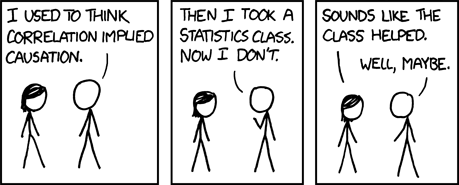
5. A comic about statistics
1. Help Haiti idea #1 (importing labor)
2. Help Haiti idea #2 (exporting security and bureaucracy)
3. Help Haiti idea #3 (exporting institutions)
and some lighter links...
4. A song about Paul Krugman. Take with the appropriate portion of salt.
5. A comic about statistics
Subscribe to:
Posts (Atom)